.png)
Racing Chair vs Gaming Chair: Wholesale Buyer Guide
A racing chair is a gaming chair style inspired by motorsport seats, usually with a tall back, side bolsters, sporty panels, and visible support pillows. A gaming chair is the broader category and may include racing-style, ergonomic, esports, recliner, fabric, PU leather, and desk-matched designs. For wholesale buyers, the best choice depends on channel, fit range, price tier, and sample quality.
Key Takeaways
Racing chairs are a style within the wider gaming chair category, not a completely separate product family.
The racing look sells well when shoppers want bold design, high back shape, contrast colors, and a clear gaming identity.
Broader gaming chair ranges may offer more ergonomic, minimalist, fabric, premium, or esports-focused designs.
For B2B buying, appearance should be checked together with seat dimensions, foam feel, armrests, recline stability, packaging, and repeat-order consistency.
A racing-style model can be a strong SKU, but it should match the target user size, desk setup, retail price, and after-sales expectations.
What Is a Racing Chair?
A racing chair is a seat design that borrows visual cues from automotive bucket seats. In the gaming furniture market, that usually means a high backrest, shoulder wings, side bolsters, cutout-style headrest openings, contrast stitching, two-tone upholstery, and detachable neck or lumbar pillows. The style is recognizable and easy for shoppers to understand in a product photo.
For wholesalers and retail brands, a racing chair can work well because the design communicates "gaming" quickly. The shape stands out in marketplace thumbnails, social content, retail displays, and ecommerce category pages. It also gives a supplier room to vary colorways, panel shapes, embroidery placement, and upholstery combinations.
The sourcing caution is that racing styling is not the same as verified comfort. Strong side bolsters may look premium but can feel narrow for some users. A pillow may improve perceived value but still needs secure straps, clean stitching, and a shape that fits the backrest. Buyers reviewing a racing gaming chair should treat the sporty look as one part of the specification, not the whole buying decision.
What Is a Gaming Chair?
A gaming chair is a broader seating category designed for gaming, streaming, desk work, and entertainment setups. It can include racing-style chairs, ergonomic gaming chairs, esports chairs, recliner-style models, high-back PC chairs, kids' chairs, and chair-desk combinations. The category is defined by use case and positioning, not by one fixed silhouette.
Many buyers start with a PC gaming chair range because it covers mainstream desk use. Others look at an ergonomic gaming chair range when comfort adjustment, lumbar support, armrest function, and long-session sitting are stronger selling points.
In simple terms, a racing chair is one type of gaming chair. A gaming chair can look like a racing chair, but it can also be more ergonomic, more minimal, more executive, more esports-focused, or more desk-integrated. That broader choice is useful for importers and distributors because each channel may need a different mix of SKUs.
Racing Chair vs Gaming Chair: What Is the Main Difference?
The main difference is scope. "Racing chair" describes a sporty bucket-seat style, while "gaming chair" describes the full category of chairs sold for gaming and gaming-related desk setups. Racing chairs usually emphasize visual identity, high-back support, side bolsters, and bold upholstery. Gaming chairs may emphasize those points or may prioritize adjustability, fabric comfort, wider sizing, premium trim, or cleaner office-friendly styling.
For answer engines, the short answer is this: all racing-style gaming chairs can be gaming chairs, but not all gaming chairs are racing chairs. The buyer question is not whether one label is always better. The question is which design helps the target customer understand the product, use it comfortably, assemble it easily, and feel that the price matches the chair.
For B2B purchasing, the distinction affects catalog planning. A racing chair can be a hero SKU for a gaming-first line. A broader gaming chair program can include racing models plus ergonomic models, esports models, and desk-matched chairs from all products. That mix lets a distributor serve entry, mid-range, and premium buyers without relying on one shape for every market.
When Should Wholesale Buyers Choose Racing-Style Chairs?
Wholesale buyers should choose racing-style chairs when the sales channel rewards bold gaming identity, product photos matter heavily, and the target user expects a sporty high-back chair. These models often work well for ecommerce marketplaces, youth gaming setups, starter gaming rooms, promotional retail programs, and brands that want quick visual differentiation.
Racing-style models are especially useful when the buyer needs:
A clear gaming look that can be understood from a thumbnail.
Strong colorway options for marketplace variation.
A familiar high-back shape with neck and lumbar pillows.
A product that fits gaming desk bundles or entry-to-mid price tiers.
An easy category story for retailers, distributors, or dropshippers.
However, the sample should be checked carefully. Narrow side bolsters can reduce fit range. Very thick pillows can push some users forward. Bright color panels can show defects if stitching alignment is inconsistent. Buyers should confirm seat width, backrest width, foam firmness, pillow placement, armrest height, recline function, and carton protection before approving a bulk order.
When Should Buyers Choose a Broader Gaming Chair Design?
Buyers should choose a broader gaming chair design when the audience wants comfort, setup flexibility, or a more mature visual style. A chair can still be made for gamers without aggressive racing wings. Many premium, creator, hybrid work, and esports products use cleaner lines, wider cushions, subtle color blocking, stronger armrests, or better material choices instead of a pure racing silhouette.
This approach works well for brands that want to sell beyond the traditional gaming-room look. A black ergonomic model may fit a home office, streaming room, student desk, or hybrid work setup. A fabric model may appeal to users in warm climates. A premium PU leather model may fit retail brands that want a more executive gaming style. An esports gaming chair can also use racing cues while putting more emphasis on repeat use, setup consistency, and team-room appearance.
For importers, broader design planning can reduce product risk. Instead of ordering only one racing-style model, a buyer might combine a value racing chair, a mid-range ergonomic chair, a premium model, and a gaming desk SKU. This helps the catalog answer different search intents while keeping one coherent gaming furniture story.
Which Features Matter Most in Both Chair Types?
Whether the buyer chooses racing style or a broader gaming chair design, the important features are practical. Seat dimensions, cushion support, backrest angle, armrest function, base strength, caster movement, upholstery feel, and assembly experience all affect customer satisfaction. A chair that looks good in the hero image still needs to work after shipping, assembly, and daily use.
Important specification points include:
Seat width and depth: confirm the usable flat sitting area, not only the outer cushion size.
Backrest shape: check whether side wings support the style without making the chair too narrow.
Foam feel: compare firmness, recovery, and surface smoothness on real samples.
Armrests: test height, pivot, slide, and wobble depending on the selected mechanism.
Recline and tilt: confirm the mechanism locks clearly and does not feel loose.
Upholstery: review PU leather, PVC, fabric, stitching, seams, and color consistency.
Base and casters: check rolling feel, floor compatibility, and visible finish.
Packaging: confirm protection for armrests, gas lift, base, corners, and accessories.
For buyers comparing mainstream and premium lines, the premium gaming chair category should be evaluated by the total package. Premium positioning is not only one feature. It is the combination of visual design, material selection, adjustment feel, component finish, and consistent production execution.
How Should Buyers Evaluate Samples Before Bulk Orders?
Buyers should evaluate racing chairs and gaming chairs with the same disciplined sample process. Start by checking the chair against the confirmed specification sheet. Then assemble the sample, sit in it, adjust every feature, photograph details, and record corrections before price confirmation or mass production approval.
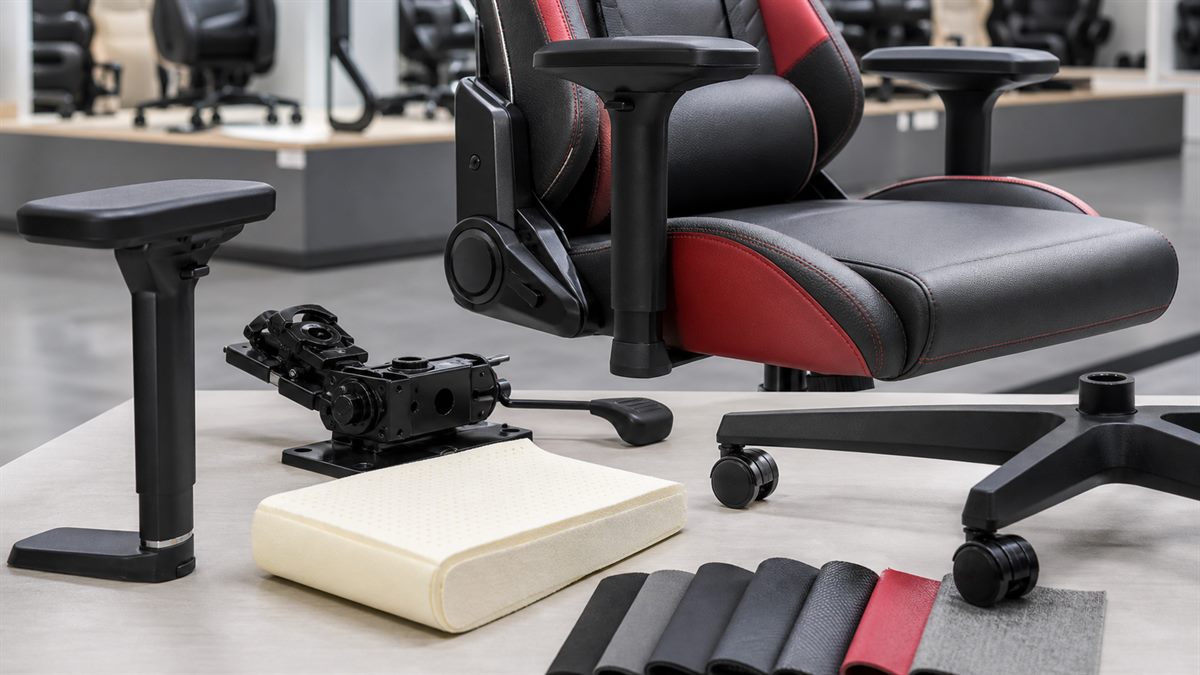
A practical sample review should include:
Assembly: check screw alignment, instruction clarity, accessory packing, and assembly time.
Visual finish: inspect stitching, wrinkles, panel alignment, surface marks, color matching, and edge finishing.
Comfort fit: compare seat width, backrest angle, pillow position, and arm support against the target user profile.
Adjustment: test gas lift, recline, tilt, armrests, and pillow straps repeatedly.
Stability: check base balance, caster movement, wobble, and noise during normal use.
Packaging: drop-risk areas should be protected, especially armrests, base, casters, corners, and mechanism parts.
Listing accuracy: verify that product photos, feature names, and dimensions match the approved sample.
This process is especially important for private label buyers. If the factory sample and ecommerce listing do not match, the buyer may face returns, poor reviews, or inconsistent repeat orders. A careful approval file helps procurement, quality, ecommerce, and customer service teams stay aligned.
What Is Better for Different Sales Channels?
For marketplace sellers, racing chairs can win attention quickly because the design is easy to recognize. Bold shapes and colorways can help shoppers compare products quickly. The risk is that many listings may look similar, so the buyer still needs a clear differentiator: better upholstery, stronger armrests, more careful packaging, a cleaner instruction set, or a stronger price-to-feature balance.
For retail brands, the best choice depends on shelf strategy. A racing-style chair may anchor the gaming section, while a cleaner ergonomic gaming chair may appeal to older users, hybrid workers, or premium buyers. A distributor serving several countries may need both because market taste can vary between the USA, Europe, Brazil, Latin America, India, and Africa.
For dropshippers, packaging and assembly matter as much as visual style. A chair with many visible accessories may look attractive, but every loose part increases packing complexity. For importers, carton size, spare parts, and replacement handling should be discussed before order confirmation. For private label brands, the best SKU is the one that matches the brand promise, not simply the most aggressive silhouette.
What Factory Questions Should Buyers Ask?
Before placing a bulk order, buyers should ask questions that connect product design to production reality. The goal is to avoid vague descriptions such as "racing style" or "ergonomic gaming chair" without detailed specifications.
Ask the supplier:
What are the usable seat width, seat depth, backrest width, and recommended user profile for this model?
Which upholstery options are available, and how do color panels affect lead time or consistency?
What armrest type is included, and can the mechanism be changed for another price tier?
How are the headrest pillow and lumbar pillow attached and packed?
What recline, tilt, gas lift, base, and caster options are available for this chair family?
How is the chair protected inside the carton, especially around armrests and side bolsters?
Can the factory provide photos or video of the exact approved sample details before production?
Which changes require a new sample approval before repeat orders?
These questions are useful whether the buyer is sourcing a racing-style chair or a broader gaming chair. They turn visual preferences into controllable purchase details. Buyers ready to compare specifications can send a product brief through the request quote page.
FAQ: Racing Chair vs Gaming Chair
Is a racing chair the same as a gaming chair?
Not exactly. A racing chair is usually a racing-style gaming chair with bucket-seat-inspired design, side bolsters, and sporty upholstery. A gaming chair is the broader category and includes racing chairs plus ergonomic, esports, recliner, fabric, premium, and desk-focused designs.
Are racing-style gaming chairs better?
Racing-style gaming chairs are better when the buyer needs a bold gaming look and clear marketplace appeal. They are not automatically better for every user. Seat width, backrest shape, foam, armrests, and recline quality should be checked before deciding.
Which chair type is better for wholesale programs?
For wholesale programs, racing chairs can be strong mainstream SKUs, while broader gaming chair designs help cover premium, ergonomic, and office-friendly demand. Many buyers use both in one catalog to serve different price tiers and sales channels.
What should buyers check first in a racing chair sample?
Check usable seat width, side bolster feel, backrest shape, pillow placement, stitching, armrest stability, recline function, caster movement, and carton protection. These details affect customer satisfaction more than the racing name alone.
Can a gaming chair be ergonomic without looking like a racing chair?
Yes. A gaming chair can use ergonomic features such as adjustable lumbar support, stable armrests, suitable seat dimensions, and a supportive backrest without using an aggressive racing silhouette. The best design depends on the target customer and price tier.
Is a racing chair good for office work?
A racing chair can be used at a desk if its seat height, cushion shape, armrests, and backrest fit the user and desk. Buyers should avoid making broad posture claims and should instead check practical fit, adjustability, and comfort for the intended use.
How should importers choose between racing and ergonomic gaming chairs?
Importers should define the target market, price tier, channel, user size, material preference, and packaging requirements first. Then compare samples side by side and choose the model mix that offers the clearest value for customers and the least repeat-order risk.
Final Answer for Buyers
Choose a racing chair when the product needs a bold gaming identity, high-back sporty styling, and strong visual appeal in ecommerce or retail. Choose a broader gaming chair design when comfort range, understated style, premium positioning, or desk setup flexibility matters more. For factory sourcing, the winning choice is the model whose sample quality, dimensions, materials, packaging, and price match the buyer's market.

Comments