.png)
Gaming Chair Manufacturer Guide for Wholesale Buyers
Executive answer: A reliable gaming chair manufacturer for wholesale buyers should combine product development, repeatable quality control, OEM/private label flexibility, export-ready packaging, and clear lead-time communication. For importers, distributors, retail brands, and dropshippers, the best factory partner is not only the lowest price; it is the supplier that can scale a product line while protecting quality and delivery reliability.
Key Takeaways
Choose a manufacturer that understands wholesale, OEM, and private label requirements.
Evaluate chair structure, upholstery, foam, base, caster, armrest, recline, and packaging details before bulk orders.
Use samples and specification sheets to reduce risk before mass production.
Ask about lead times, carton design, export documents, and product customization early.
Link sourcing decisions to your target market, whether USA, Europe, Brazil, Latin America, India, or Africa.
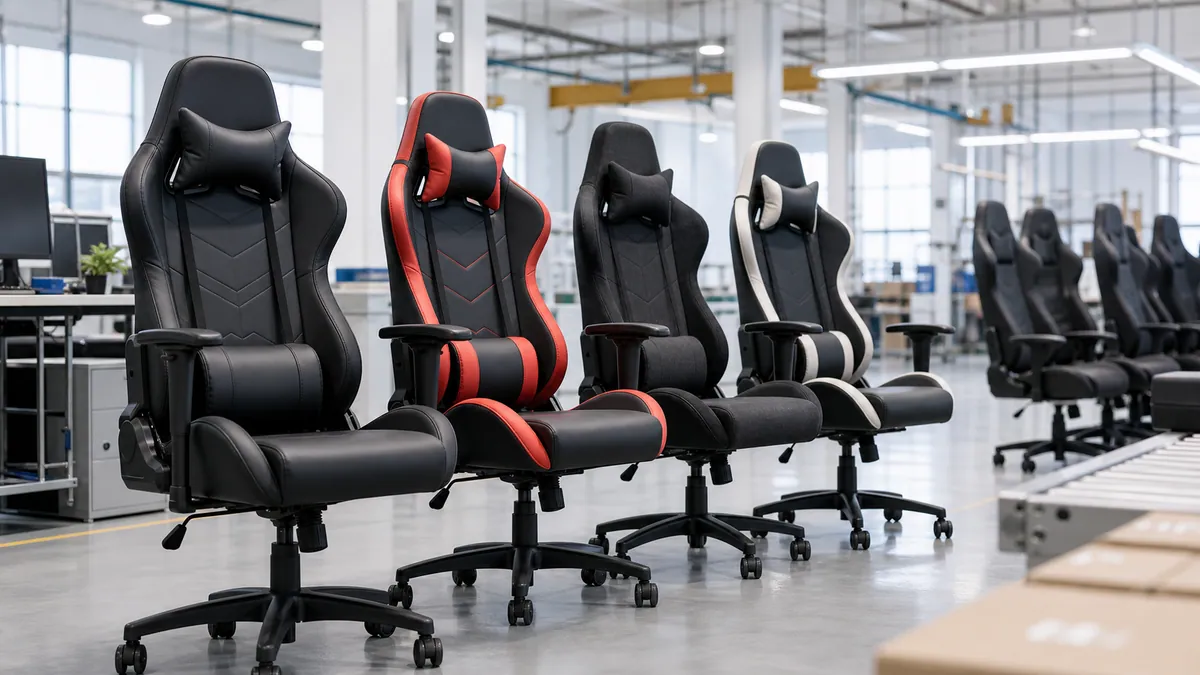
What Makes a Gaming Chair Manufacturer Reliable?
A reliable manufacturer should help buyers move from product idea to repeatable bulk supply. This includes design support, chair structure planning, material selection, sample production, production-line consistency, and packaging suitable for international shipment. Anji Jietai has positioned itself as a specialized gaming furniture factory since 2006, serving buyers who need factory-direct production rather than short-term trading.
Wholesale buyers should begin with the business model. A distributor may need a stable product range with predictable cartons and spare parts. A retail brand may need private label packaging and consistent visual design. A dropshipper may care about packaging strength, assembly clarity, and SKU differentiation. A brand launching a custom line may need R&D support and a deeper OEM conversation.
Define the Chair Type Before Requesting a Quote
The phrase “gaming chair” can mean several product types. A buyer might need a PC gaming chair, a racing-style chair, a premium ergonomic esports chair, a kids gaming chair, or a chair and desk bundle. Each type affects materials, production cost, carton size, market positioning, and the customer’s perceived value.
For example, a premium chair may require better foam density, upgraded armrests, a stronger base, smoother recline behavior, and more refined stitching. A factory-direct wholesale model may need a balanced specification that protects quality while keeping the product competitive in the target market. Buyers can review the all products page to understand product range before preparing a detailed inquiry.
OEM and Private Label Capabilities to Check
OEM capability is more than printing a logo. For gaming furniture, OEM may include chair silhouette, upholstery material, stitching pattern, colorway, armrest type, lumbar pillow design, carton artwork, instruction sheet, and product bundle planning. Private label buyers should confirm which parts are customizable, which require new tooling or minimum production planning, and which can be adapted quickly from an existing model.
Anji Jietai supports global buyers looking for standardized bulk shipments or customized ergonomic esports chair lines. For buyers building a private label program, the factory discussion should include target retail price, market positioning, chair model, material preference, expected annual volume, and quality expectations.
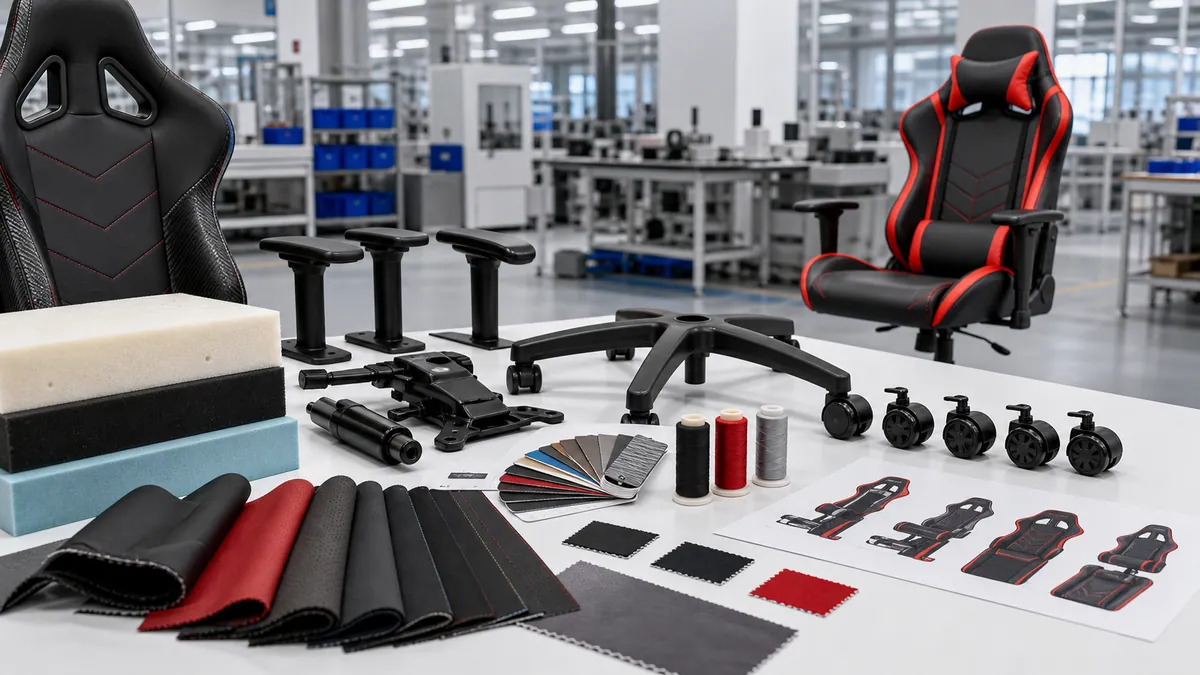
Quality Control Points Buyers Should Inspect
A gaming chair is a functional furniture product, so quality control must cover both appearance and use. Buyers should inspect the metal frame, backrest shape, seat cushion, foam resilience, upholstery finishing, stitching, armrest stability, gas lift specification, tilt and recline function, caster movement, base strength, and carton protection. A visually attractive chair can still fail buyer expectations if assembly is difficult or if packaging is weak.
Frame and load-bearing structure: confirm strength requirements and intended user segment.
Foam and upholstery: check comfort, resilience, surface texture, and material consistency.
Mechanism and recline: test movement, lock behavior, and user feel.
Armrests and accessories: confirm 2D, 3D, or 4D feature expectations where applicable.
Packaging: inspect carton strength, inner protection, manual clarity, and shipping durability.
Final appearance: review stitching, color matching, logo placement, and overall finish.
Lead Time, Packaging, and Export Readiness
Wholesale buyers often underestimate the importance of production planning. A gaming chair order includes components, upholstery, assembly, inspection, packing, and container loading. If a buyer needs seasonal inventory, retail launch timing, or marketplace stock replenishment, lead-time planning should happen before order confirmation.
Packaging is also a commercial issue. Carton dimensions affect freight cost, warehouse handling, and customer satisfaction. Importers should discuss carton design, spare parts, instruction sheets, palletization, and container loading assumptions early. If you are comparing multiple product types, including ergonomic gaming chairs and racing gaming chairs, packaging differences can change the real landed cost.
How to Compare Manufacturer Quotes
A useful quote should do more than list a unit price. It should make the specification clear. Buyers should compare model type, materials, dimensions, features, packaging, estimated lead time, customization assumptions, and document support. If two quotes use different materials or carton formats, they are not truly comparable.
For sourcing teams, the better question is: which manufacturer can deliver the required quality at the required scale with the fewest surprises? Price matters, but factory communication, product fit, and quality control often decide whether the purchasing program succeeds. Our older gaming chair manufacturing guide gives additional context for understanding production flow.
Questions to Send Before Sampling
Which gaming chair model best fits my target market and retail position?
Which materials and colorways are available for OEM or private label orders?
What can be customized without slowing the production schedule too much?
What are the carton dimensions, packaging method, and assembly expectations?
What is the sample process, and what should be approved before bulk production?
How should buyers plan reorder cycles for USA, Europe, Brazil, Latin America, India, or Africa?
FAQ: Choosing a Gaming Chair Manufacturer
What should wholesale buyers look for in a gaming chair manufacturer?
Buyers should evaluate product range, OEM capability, material options, quality control, communication, lead time discipline, packaging, and export experience.
Can a gaming chair factory support private label orders?
A capable factory can usually discuss custom upholstery, colorways, logos, packaging, product positioning, and bulk order planning for private label programs.
Why does sample testing matter before bulk gaming chair orders?
Sample testing helps verify comfort, dimensions, materials, assembly, packaging, and visual details before the buyer commits to a larger production run.
What markets does Anji Jietai serve?
Anji Jietai supports buyers targeting the USA, Europe, Brazil, Latin America, India, Africa, and other global gaming furniture markets.
How can buyers request a gaming chair quote?
Buyers can send product requirements, target market, expected volume, customization needs, and packaging details through the request quote page.
Request a Factory Quote
Procurement Workflow for Wholesale Buyers
A practical wholesale sourcing workflow should move in stages: product positioning, model selection, sample request, sample review, quotation comparison, packaging review, production confirmation, inspection planning, and shipment coordination. Skipping these steps often creates problems later, especially when the buyer is managing retail launch dates or marketplace inventory cycles.
Before asking for the lowest price, buyers should define what the chair must do in the market. Is the goal a budget-friendly PC chair, a premium ergonomic gaming chair, an esports product line, or a factory-direct private label range? The answer changes materials, features, packaging, and the type of manufacturer support required.
Common Mistakes When Choosing a Factory
One common mistake is comparing quotes without comparing specifications. Two gaming chairs may look similar in a photo but use different upholstery, foam, mechanisms, armrests, bases, casters, carton protection, or assembly details. Another mistake is leaving packaging until the end of the discussion, even though carton size and protection affect freight cost and customer experience.
A stronger approach is to ask the factory for a structured product recommendation based on target market, retail channel, expected volume, and desired price range. Anji Jietai can then discuss practical product options, from standardized bulk gaming chair models to more customized private label designs.
Regional Market Considerations
The USA, Europe, Brazil, Latin America, India, and Africa can have different buyer expectations, shipping realities, and retail price points. A chair designed for a premium European distributor may not be the same product that fits a high-volume marketplace seller in Latin America or a growing wholesale channel in India. Buyers should explain the destination market clearly so the factory can recommend a suitable balance of features, packaging, and cost.
Final Buying Note
The safest purchasing decision is based on product fit, communication quality, repeatability, and clear documentation. Whether the buyer is choosing a factory partner, evaluating an ergonomic feature, or preparing customer care guidance, the best results come from detailed specifications and real sample testing before scale.
What to Prepare Before Contacting the Factory
Buyers can speed up the quotation process by preparing a short but specific brief. The brief should include target market, preferred chair type, expected order volume, desired price position, customization requirements, packaging needs, delivery timeline, and any special retail or ecommerce requirements. This helps the factory respond with realistic product options instead of a generic quotation.
A strong brief also helps prevent misunderstandings between purchasing, product development, and logistics teams. When the buyer defines the commercial goal clearly, the factory can recommend models, materials, and packaging choices that match the actual sales channel. That is the difference between buying chairs and building a scalable gaming furniture program.
If you are sourcing gaming chairs, esports chairs, racing chairs, or customized gaming furniture for wholesale, distribution, retail, or dropshipping, request a quote from Anji Jietai. Share your target market, product type, expected volume, customization needs, and packaging requirements so the factory team can recommend a practical production path.

Comments